Product Overview:
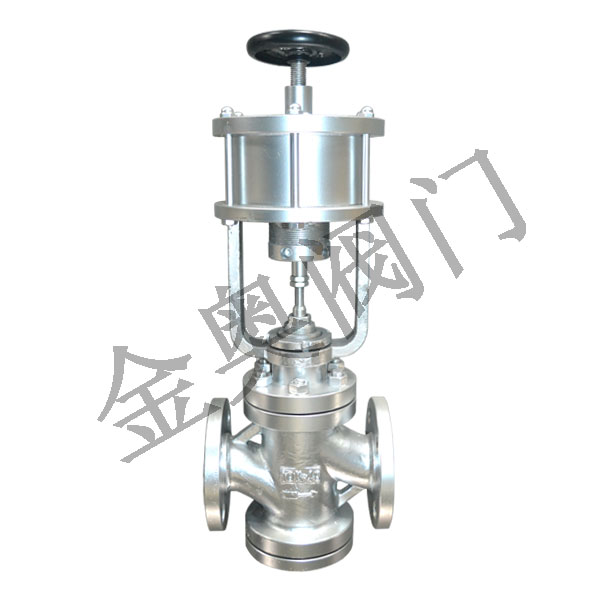
ZSQ pneumatic piston shut-off valve (referred to as piston shut-off valve) is an actuation unit in the pneumatic unit instrument cluster. It receives signals from the regulating instrument and controls the shut-off and on-switching of fluids in the process pipeline. The product has the advantages of large operating force, novel valve body design, small flow resistance, large rated flow coefficient, large allowable pressure difference, and excellent sealing performance. Therefore, it is widely used in the automatic control and remote control system of the production process in petroleum, chemical, metallurgy, electric power, textile and other industrial sectors.
Product features:
The pneumatic piston shut-off valve is composed of two parts: a pneumatic piston actuator and a straight stroke adjustment mechanism, and the middle is connected by a bracket. According to the type of adjustment mechanism, pneumatic piston shut-off valves can be divided into three types: straight-through single-seat shut-off valve (ZSQP type), straight-through sleeve shut-off valve (ZSQM type), and two-position three-way shut-off valve (ZSQN type). There are two types of pneumatic piston actuators: single-acting (spring reset) and double-acting (double intake). Using a single-acting actuator, the whole machine can be divided into air shutdown type (horizontal pipeline connection) and air opening type (horizontal pipeline disconnection). Pneumatic piston shut-off valves are available in two sealing forms, hard seal and soft seal, which are suitable for different temperatures and pressures.
When the signal pressure is zero, the spool is in the initial state (normally open or normally closed) due to the preload force of the spring (single-acting only). When the actuator receives the signal pressure (0.4~0.6MPa), the thrust is generated on the piston, which compresses the spring, driving the push rod, valve body, and valve core to move to the limit position, so that the valve is fully open or fully closed. Achieve the control of connecting and cutting off the medium in the pipeline or switching between pipelines. Equipped with a two-position three-way solenoid valve, the control of the piston shut-off valve is more convenient and simple.
|
Nominal diameter DN (mm) |
20 |
25 |
32 |
40 |
50 |
65 |
80 |
100 |
||
|
Rated flow factor Kv |
7 |
11 |
20 |
30 |
48 |
75 |
120 |
190 |
||
|
Rated stroke (mm) |
8 |
12 |
20 |
25 |
||||||
|
Cylinder Diameter (mm) |
75 |
100 |
150 |
|||||||
|
Allowable leakage |
Hard seal (l/h) |
Single-seat, tee: 1.2×10⁻⁷× valve rated capacity |
||||||||
|
Soft seal |
Level VI |
|||||||||
|
Operating Temperature ( °C ) |
-20 ~ 200 -40 ~ 450 |
|||||||||
|
Nominal pressure PN (MPa) |
1.6 4.0 6.4 |
|||||||||
|
Allowable Differential Pressure (MPa) |
ZSQP |
Single action |
1.16 |
0.66 |
0.38 |
0.6 |
0.39 |
0.47 |
0.31 |
0.20 |
|
Double acting |
6.4 |
5.0 |
2.8 |
3.3 |
2.13 |
2.71 |
1.75 |
1.11 |
||
|
ZSQM |
Single action |
Nominal pressure |
||||||||
|
Double acting |
||||||||||
|
ZSQN |
Single action |
0.89 |
0.57 |
0.35 |
0.56 |
0.36 |
0.45 |
0.30 |
0.20 |
|
|
Double acting |
5.2 |
3.22 |
2.03 |
2.27 |
1.46 |
2.00 |
1.32 |
0.85 |
||
|
Signal Pressure (kPa) |
0 or 400 ~ 600 |
|||||||||
Specification weight
|
Nominal diameter DN |
L |
A |
H |
L 1 |
H 1 |
A 1 |
Weight (kg) |
Signal connector female thread |
|
20 |
150 |
130 |
220 |
80 |
115 |
100 |
10 |
M10×1 |
|
25 |
160 |
130 |
220 |
80 |
120 |
100 |
12 |
|
|
32 |
180 |
150 |
235 |
80 |
130 |
100 |
15 |
|
|
40 |
200 |
150 |
235 |
95 |
138 |
120 |
18 |
|
|
50 |
230 |
150 |
240 |
95 |
155 |
120 |
25 |
|
|
65 |
290 |
280 |
250 |
105 |
178 |
160 |
30 |
|
|
80 |
310 |
280 |
260 |
105 |
207 |
160 |
40 |
|
|
100 |
350 |
280 |
265 |
105 |
222 |
160 |
60 |
Connection standard
Flange standard: cast iron flange GB4216-84 cast steel flange GB9113-88, JB/T79-94
Flange sealing surface type: PN16 is convex PN40 and 64 are concave and convex surfaces, and the valve body is concave
Structure length: GB12221-89
Actuator signal interface: M10×1
*Valve body flange and flange end pitch can be manufactured according to user-specified standards.
Such as: ANSI, JIS, DIN and other standards